FLU in the media
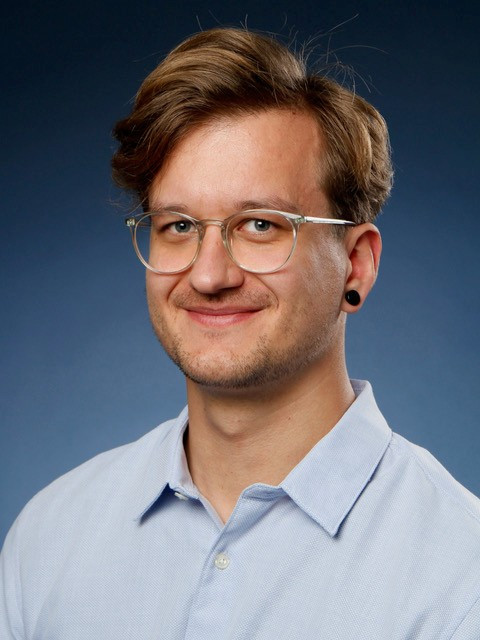
Lukas Kob: Prague is establishing itself as a major center for philosophy
German researcher Lukas Kob has been a research fellow at the Institute of Philosophy of the Czech Academy of Sciences since last year, supported by a prestigious fellowship from the Alexander von Humboldt Foundation. In a commentary for the VědaVýzkum.cz portal, he explains why leading experts in the field from New York and Germany recommended the Czech capital to him for his postdoctoral research, and why he himself sees Prague as an important center for the philosophy of consciousness and artificial intelligence.
According to Lukas Kob, what makes the Czech academic environment unique is its strong philosophical tradition, active community, international connections, and the increasingly close links between philosophy, neuroscience, and artificial intelligence. He appreciates the fact that many of his Prague-based colleagues approach AI from the perspectives of philosophy of language, philosophy of science, ethics, or AI research itself. This means that researchers do not encounter only specialists from their own field, but also people who examine the same problems from different perspectives.
Dr. Lukas Kob of Otto von Guericke University Magdeburg has been working in the Department of Analytic Philosophy at the Institute of Philosophy of the Czech Academy of Sciences since October 2025 as a Feodor Lynen Postdoctoral Research Fellow, funded by the Alexander von Humboldt Foundation. His research focuses on the possibility of consciousness emerging in artificial systems. He applies philosophical insights into consciousness to recently successful AI architectures as well as to brain organoids — artificial “mini-brains” grown from stem cells. The aim is to gain a better understanding of the conditions under which artificial systems could potentially be considered conscious.
Read the full article on VědaVýzkum.cz
Lukas Kob
- 14. 9. 2026
- FLÚ v médiích

“Disinformation can be a lifestyle.” Interview with the philosopher of language Tomáš Koblížek
In a wide-ranging interview for Radio Prague International, the philosopher says disinfo isn’t focused only on deceiving people but is also about “boring” them into losing interest in certain issues entirely. But, he argues, it is possible to combat it. The interview was conducted in connection with the recent publication of the book Disinformation and Hate Speech from the Perspectives of Philosophy, Law and Security, which he co-authored...
- 7. 11. 2025
- FLÚ v médiích
Mark Coeckelbergh on the AI Act: It's a good start, but it has its drawbacks
Mark Coeckelbergh from the Centre for Environmental and Technological Ethics - Prague (CETE-P) at our Institute of Philosophy is one of the members of the expert group that participated in the preparation of the so-called AI Act. It is the first ever comprehensive set of laws in the world from the European Union regulating the use of artificial intelligence. He described how the regulation came about in an interview with Forbes magazine. Mark Coeckelbergh also spoke about the ethical, political and legislative aspects of the AI Act at a recent workshop organized by the Centre for Environmental and Technological Ethics - Prague (CETE-P) in cooperation with the consulting firm PricewaterhouseCoopers. You can read about the workshop HERE.
- 27. 6. 2024
- FLÚ v médiích
Comenius, a man who tried to use education to build a better understanding between the peoples of Europe
Discussion of Melvyn Bragg and guests: Vladimir Urbanek (Department of Comenius Studies and Early Modern Intellectual History, Institute of Philosophy, CAS), Howard Hotson (University of Oxford) and Suzanna Ivanic (University of Kent) on BBC Radio 4.
- 20. 5. 2022
- FLÚ v médiích
Project traces extensive correspondence of 17th century philosopher Jan Amos Comenius
The digitalisation and visualisation of Comenius’s correspondence was carried out by the Department for Comenius Studies and Early Modern Intellectual History of the Institute of Philosophy, CAS, as part of a larger project of Oxford University called Cultures of Knowledge. What is the aim of the database and what light does it shed on the famous 17th century scholar and pioneering educator? Radio Prague International discussed these questions with Vladimír Urbánek, one of the researchers behind the project. For more see HERE.
- 13. 5. 2020
- FLÚ v médiích